Real Weddings at Hodsock Priory
Real wedding · Hodsock Priory · October Carl & Sarah at Hodsock Autumn light, a lovely laid-back couple and an 80s disco—just my cuppa tea. 01 The day What a…

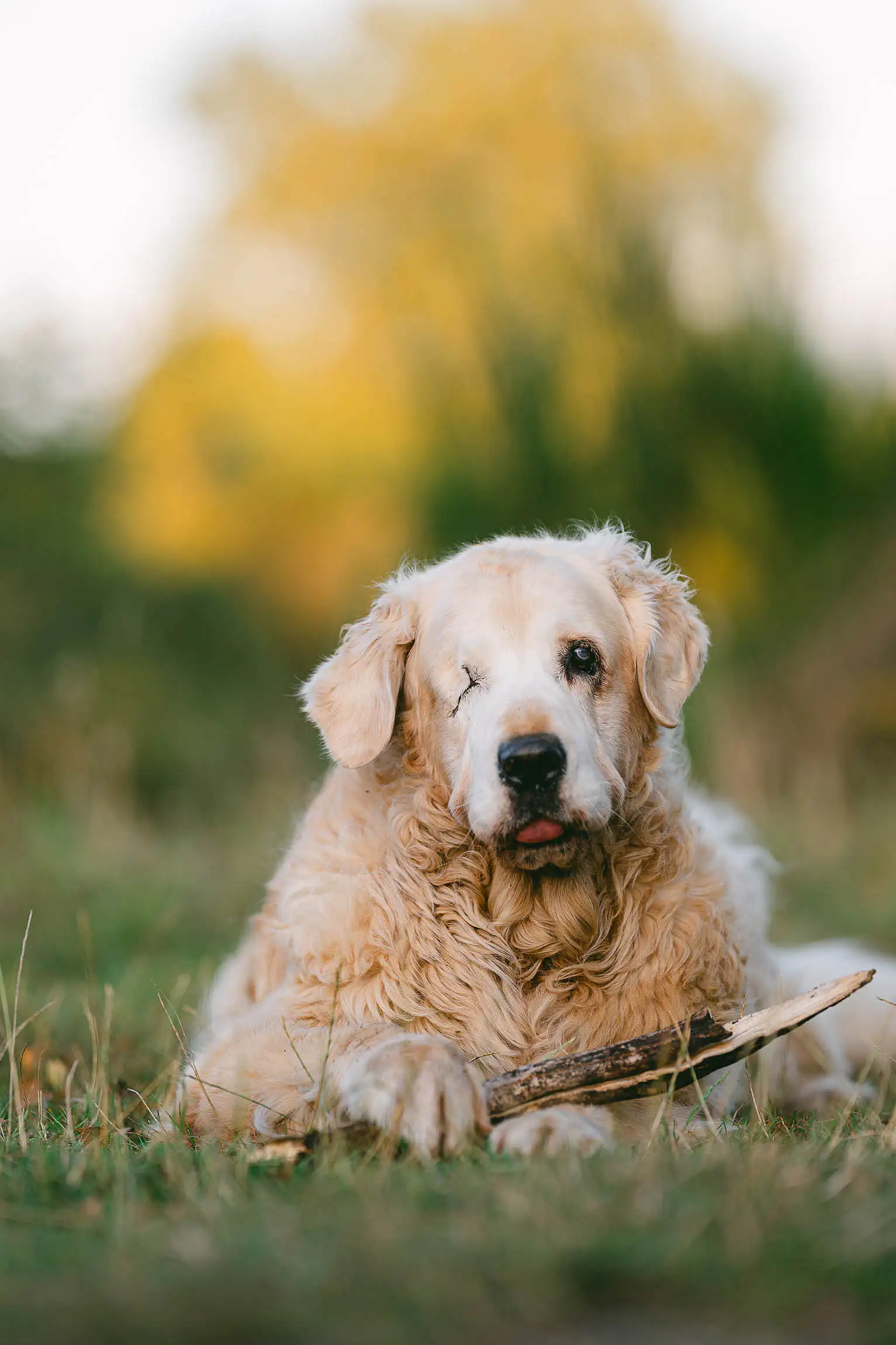
A dog can be one of the best parts of a wedding day. It only works, though, when the decision is made for the right reasons.
I’ve photographed dogs at weddings across Yorkshire and Nottinghamshire for twenty years, and I’ve watched them do everything from walking calmly down the aisle to point-blank refusing to leave the buffet table. Both are memorable. Only one of them is a photograph you plan for.
This guide is the one I wished existed when couples first started asking me “can we bring the dog?” It’s built from real weddings, real venues, and the questions couples actually ask me in the run-up to their day — not a generic listicle of paw-print puns.
Quick answer: a dog can be a brilliant part of a wedding if the venue permits it, the dog is comfortable around people and noise, and someone other than the couple is responsible for its care that day. If any of those three things isn’t true, it’s worth rethinking how — or whether — your dog attends.
Start here, before the venue, before the outfit, before any of it: is your dog actually going to enjoy this?
A wedding is a lot, even for a well-socialised dog. New people, unfamiliar smells, loud applause, confetti in the air, dropped canapés everywhere. Some dogs find that thrilling. Others find it exhausting, and a handful find it genuinely frightening. Your dog’s wishes don’t get a vote in the seating plan, but they should absolutely get one here.
Work through this honestly rather than hopefully:
Decision checklist
Be honest, not hopeful.
If most of that sounds like your dog on an ordinary good day, you’re in a strong position. If two or three items give you pause, that’s not a reason to rule it out entirely — it’s a reason to think about a shorter, more limited role rather than a full day. More on that below.
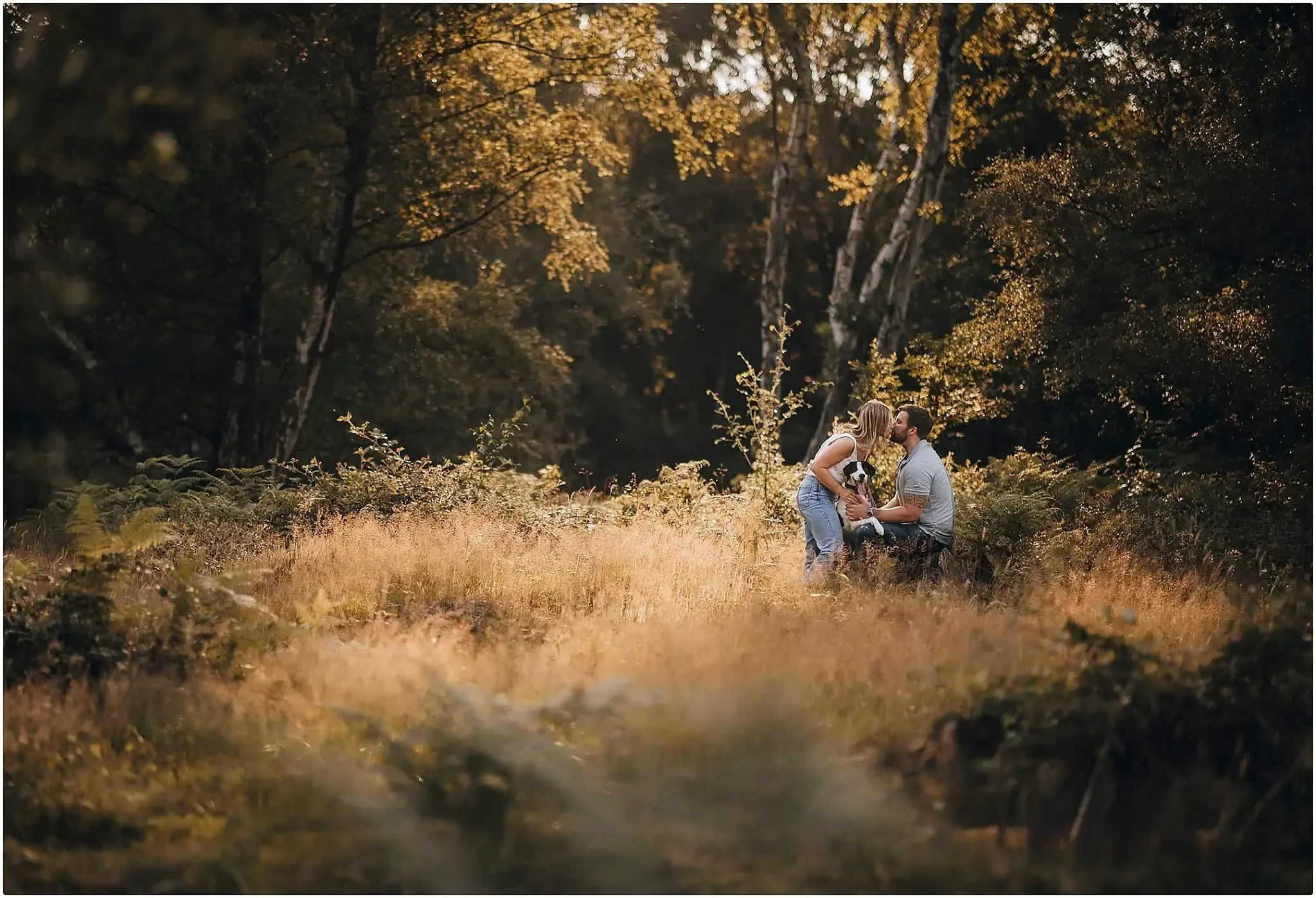
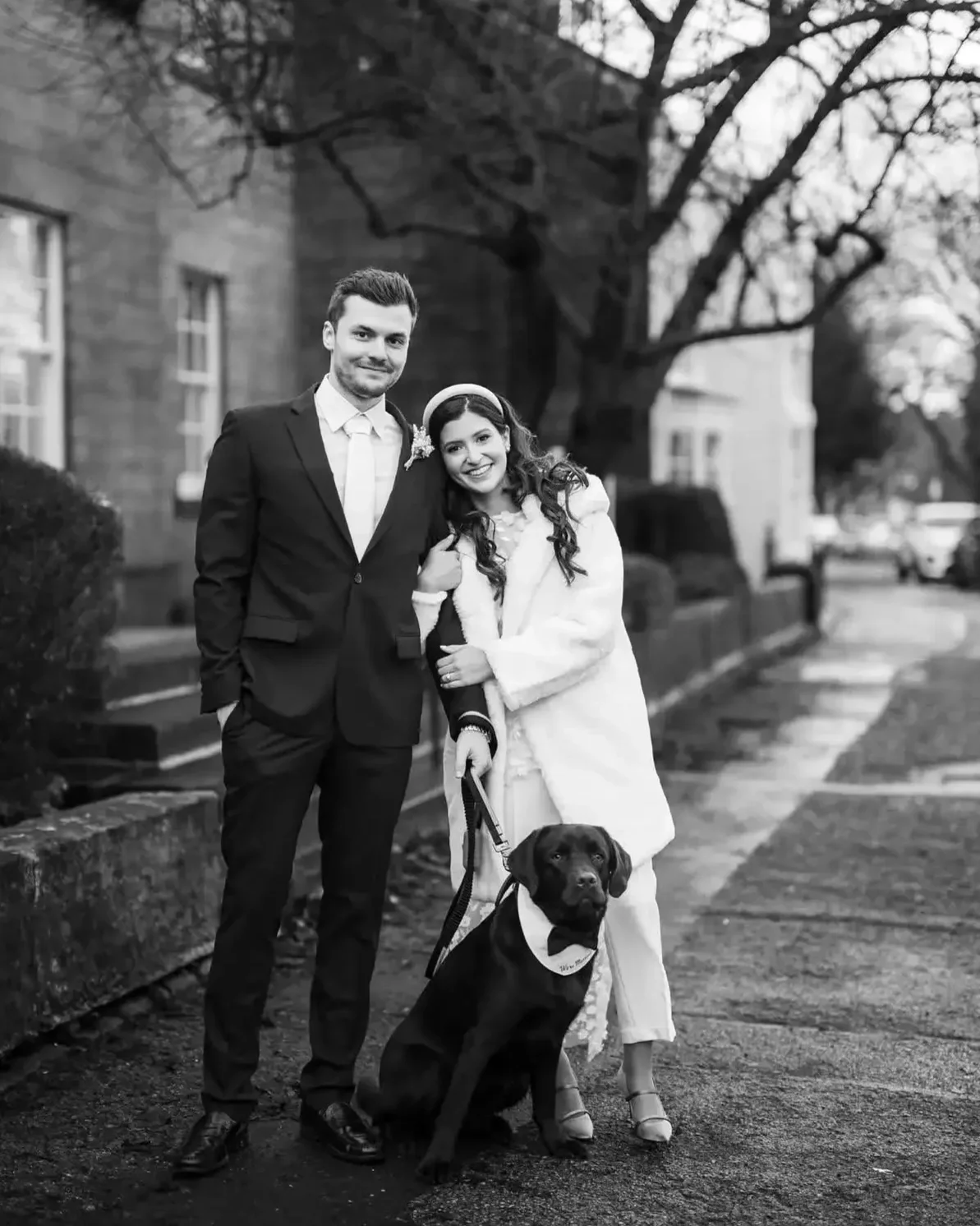
“Dog-friendly” means very different things depending who you ask. Some venues mean your dog is welcome in every corner of the building. Others mean your dog can stand on the lawn for confetti and that’s it. Get specifics, in writing, before you plan anything around it.
Ask your venue directly:
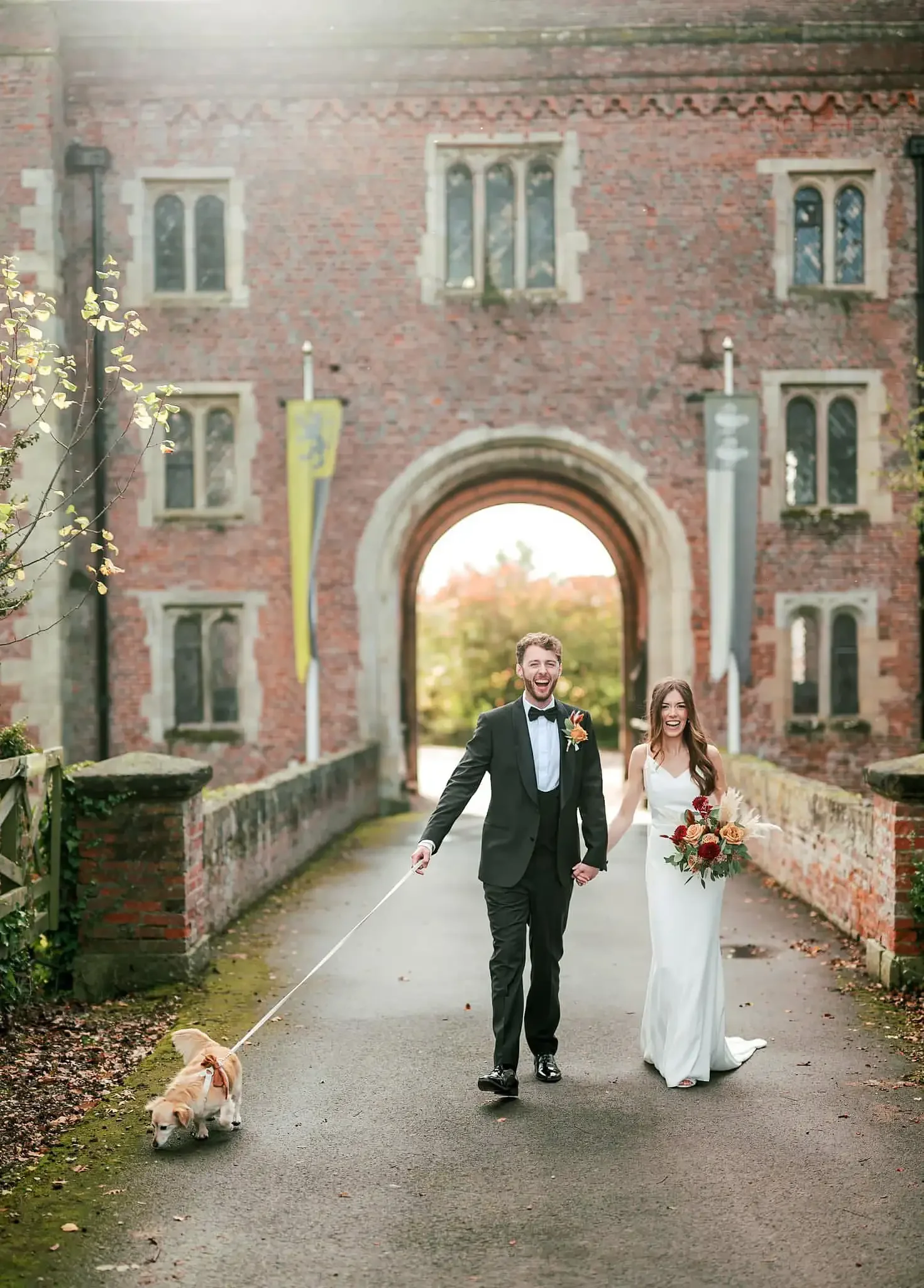
I’ve photographed weddings at venues that couldn’t be more different in their approach to this. Hodsock Priory handles dogs at weddings particularly well — plenty of grounds, a relaxed attitude, and the kind of layout that gives a dog somewhere quiet to retreat to. Bagden Hall is another venue where I’ve seen a dog take on ring-bearer duties without a hitch. Every venue is different, though, so always confirm directly rather than assuming because one venue is relaxed about it, they all are.
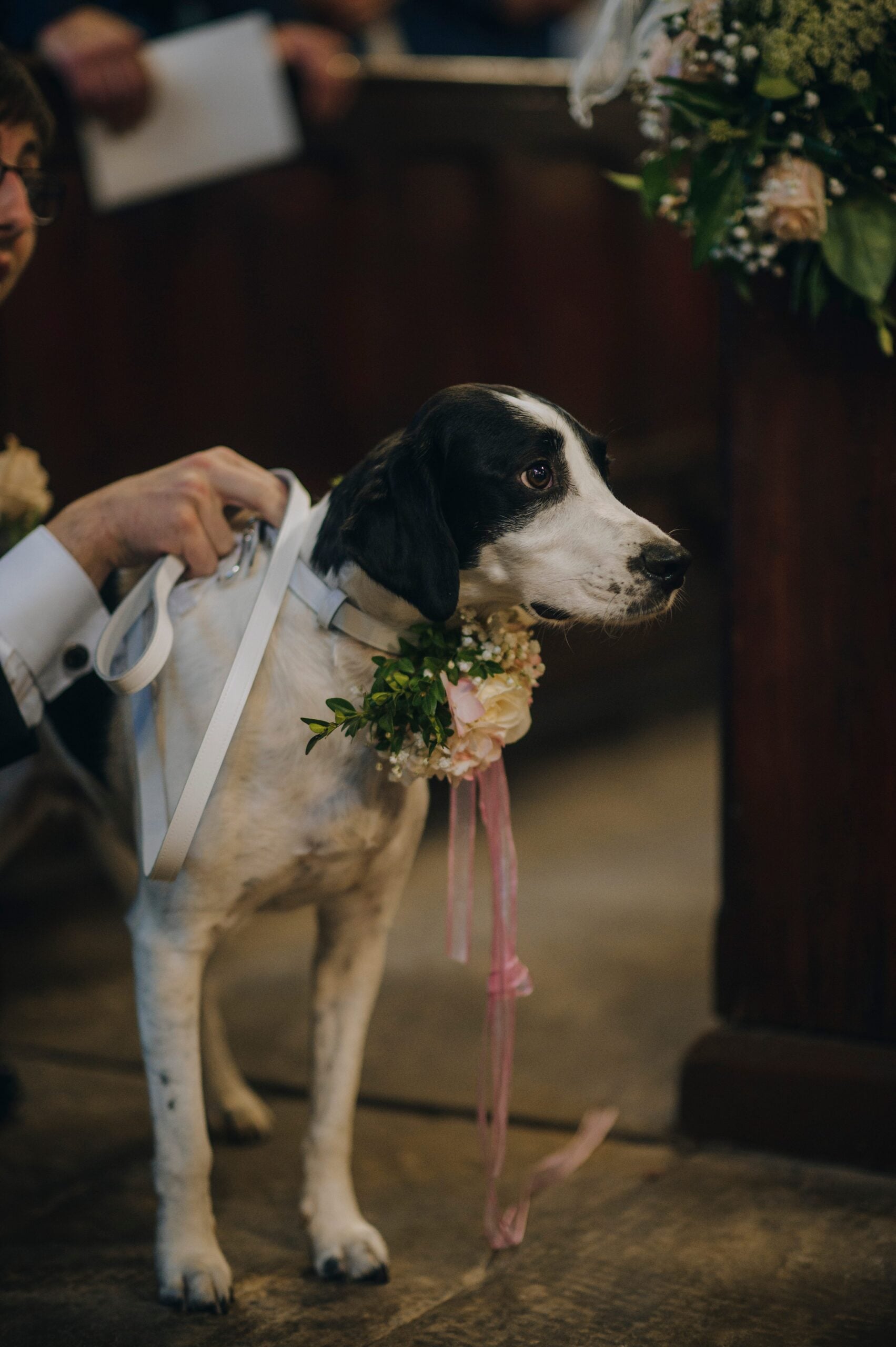
This is, without much competition, the single most useful piece of advice in this whole guide.
Neither of you should be responsible for the dog on your wedding day. Not because you don’t want to be near them — you clearly do, or none of this would apply — but because you physically can’t manage a lead, a toilet break and a bridesmaid’s questions about the table plan at the same time. Somebody else needs that job, and it shouldn’t be somebody with another important role in the day.
You’ve broadly got three options: a trusted friend or family member who isn’t in the bridal party, a professional dog wedding chaperone, or your regular dog walker or sitter if they know your dog well. All three can work. What matters is that the person is genuinely spare for the whole time your dog is there — not half-watching from the top table.
A good handler is typically responsible for:
Questions to ask a dog chaperone
Whether it’s a friend or a professional, ask these before the day.
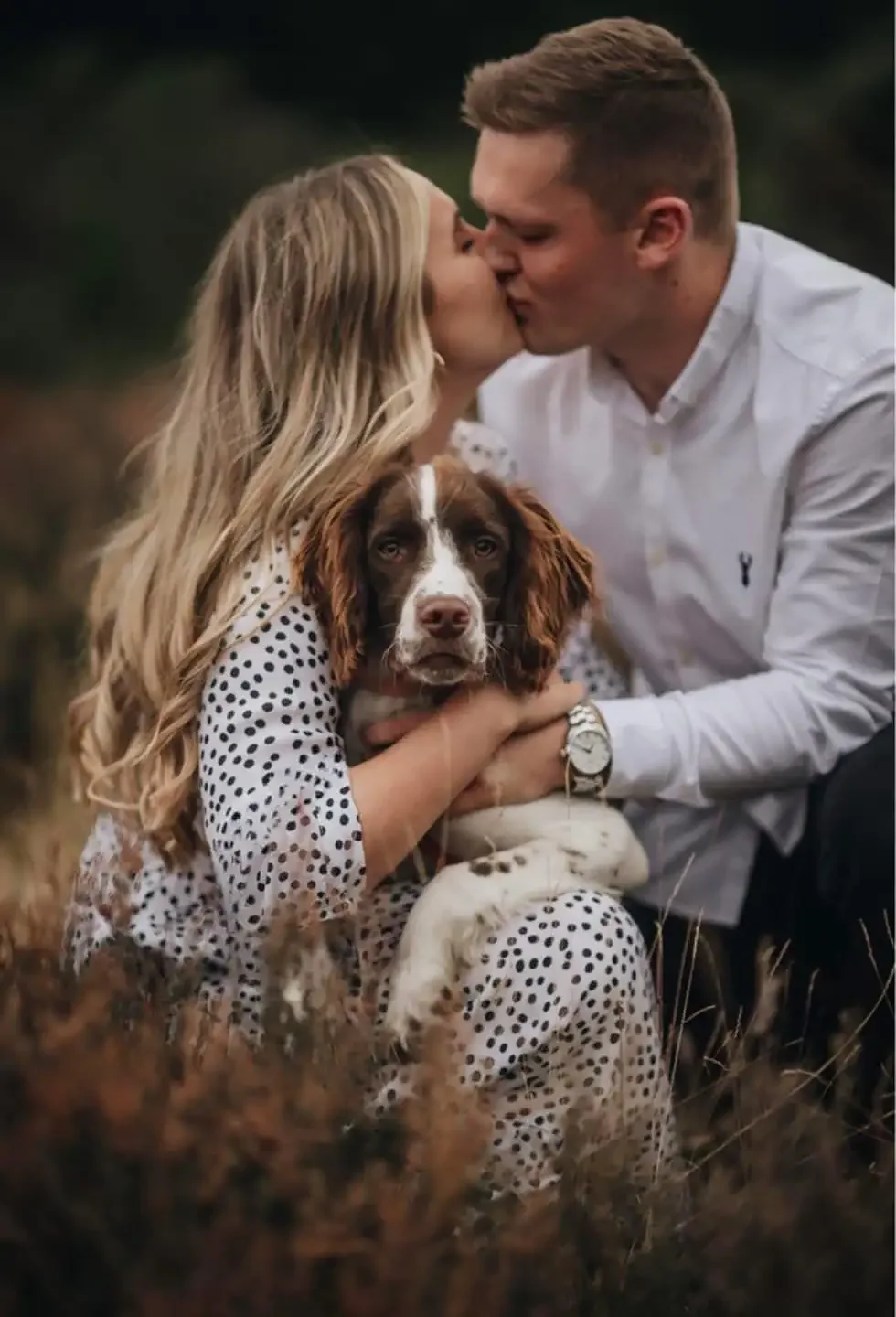
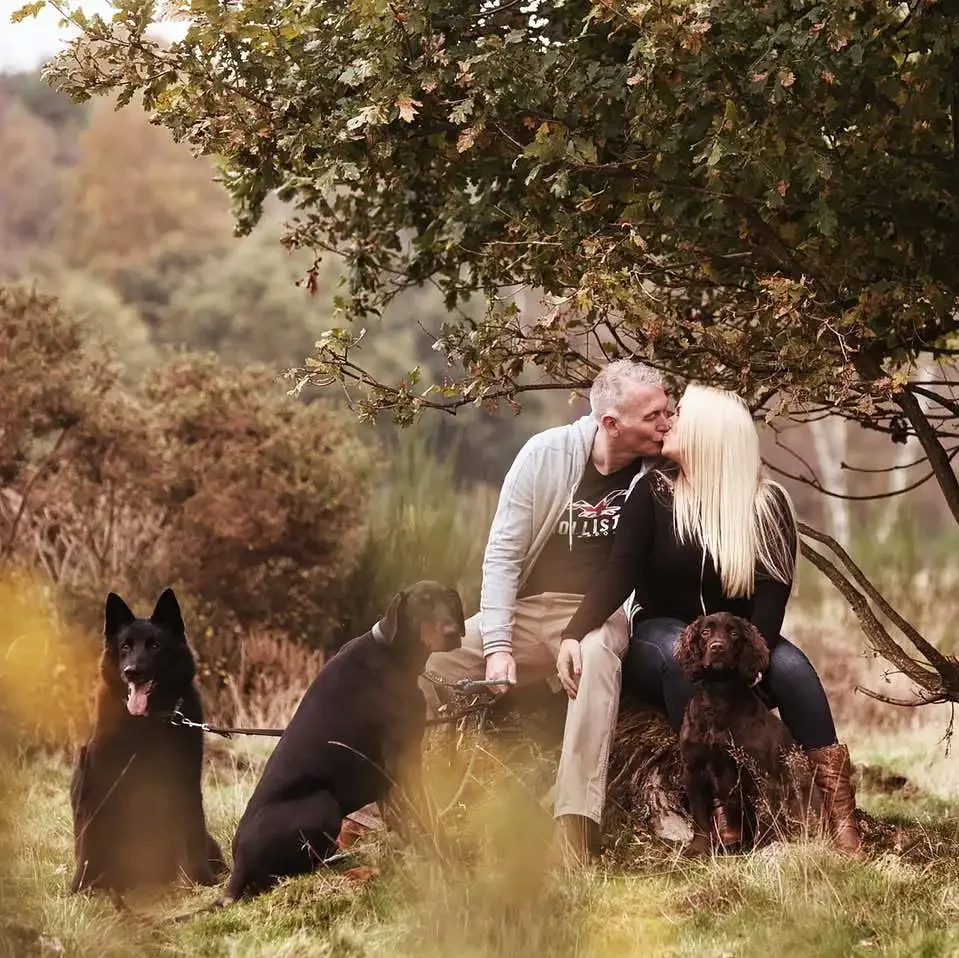
Most of the dogs I photograph at weddings aren’t there for the whole day, and that’s usually the right call. A shorter, well-timed appearance almost always goes better than expecting a dog to sit through ten hours of a wedding it doesn’t understand.
Here’s a sample structure I’ve seen work well:
A sample dog-friendly timeline
Total time at the wedding: roughly three to four hours, covering the parts that matter most.
That’s not a rule, just a starting point. Some dogs happily stay right through the evening reception, especially at home weddings or smaller, quieter days. Others are ready to go after the confetti. Build the timeline around your dog, not the other way round, and tell your photographer and venue coordinator what you’ve agreed so nobody’s chasing a dog that’s already gone home.
There’s more than one way to include a dog, and “there for the whole thing” is only one of them.
On the ring bearer point specifically: I’ve seen this go wonderfully and I’ve seen a dog trot straight past the celebrant with the pouch still swinging. Attach something symbolic, keep the actual rings with the best man or a ring cushion holder if you want a genuine safety net, and treat the dog’s version as a lovely photograph rather than a load-bearing part of the ceremony logistics.
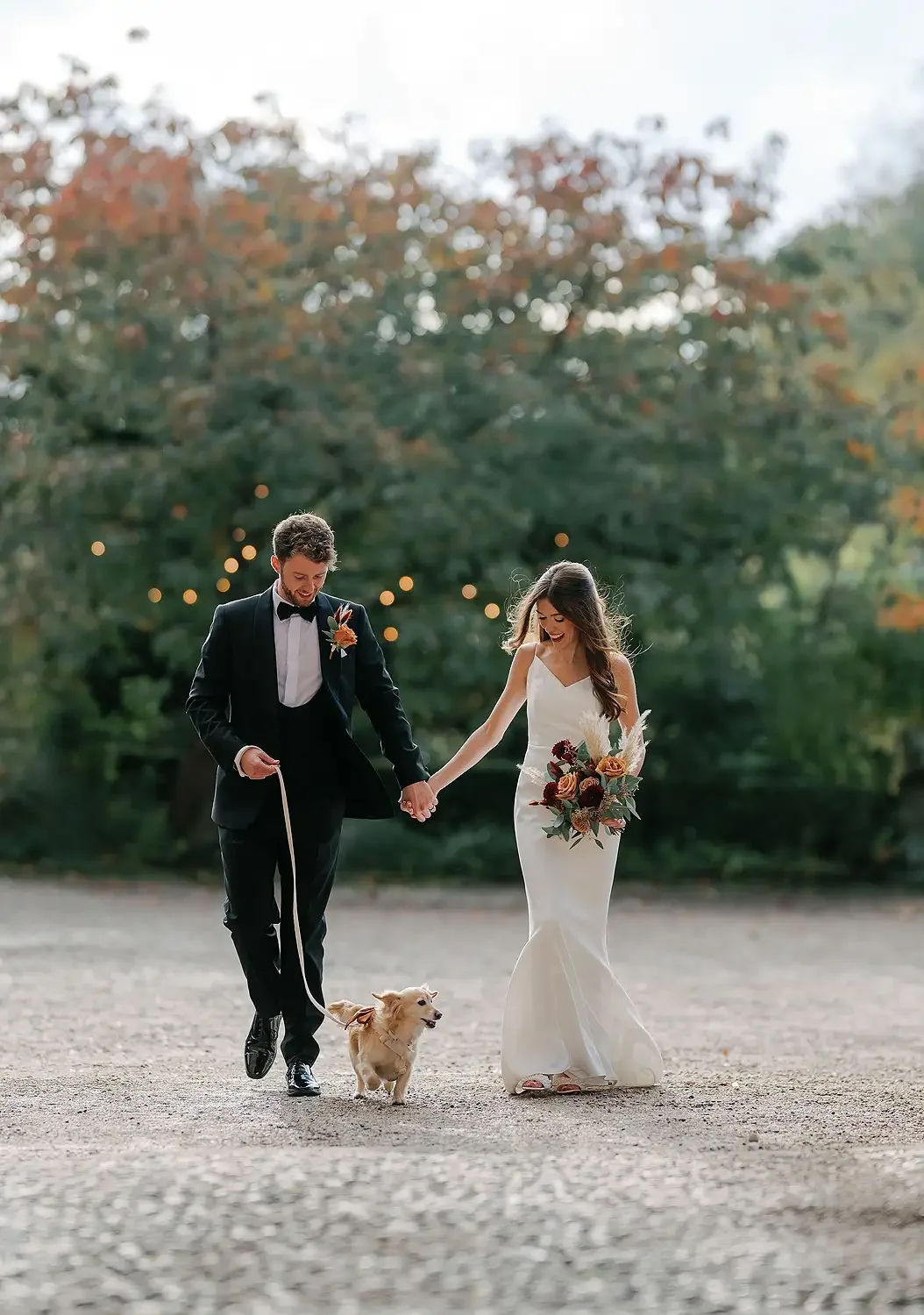
The ceremony is the highest-stakes ten minutes of the day for a dog. Everyone’s quiet, everyone’s watching, and there’s nowhere to hide if something goes sideways. A bit of preparation goes a long way.
Decide in advance: where the dog will sit or stand, who’s physically holding the lead throughout (not you), and what the exit route is if the dog needs to leave quickly and quietly. Outdoor ceremonies tend to be more forgiving — more space, more natural distraction, easier for a dog to settle. Indoor ceremonies concentrate the noise and the audience, so know your dog’s tolerance before committing to one.
If your dog is walking down the aisle, rehearse it. Not necessarily at the venue, but somewhere with distraction — a busy park, a family gathering — so the handler knows realistically how it’ll go. A dog that’s never practised the walk with a room full of eyes on it is a coin flip. A dog that’s done it a dozen times with treats and a calm handler is a much safer bet.
Barking during the vows happens. It’s rarely the disaster it feels like in the moment — most guests find it charming rather than disruptive, and a good handler will have the dog out of the room within seconds if needed. Brief the celebrant beforehand so nobody’s thrown by it, and agree a quiet signal with your handler for “take them out now” versus “it’s fine, leave them.”
This is where I can talk with the most confidence, because it’s the part I actually do.
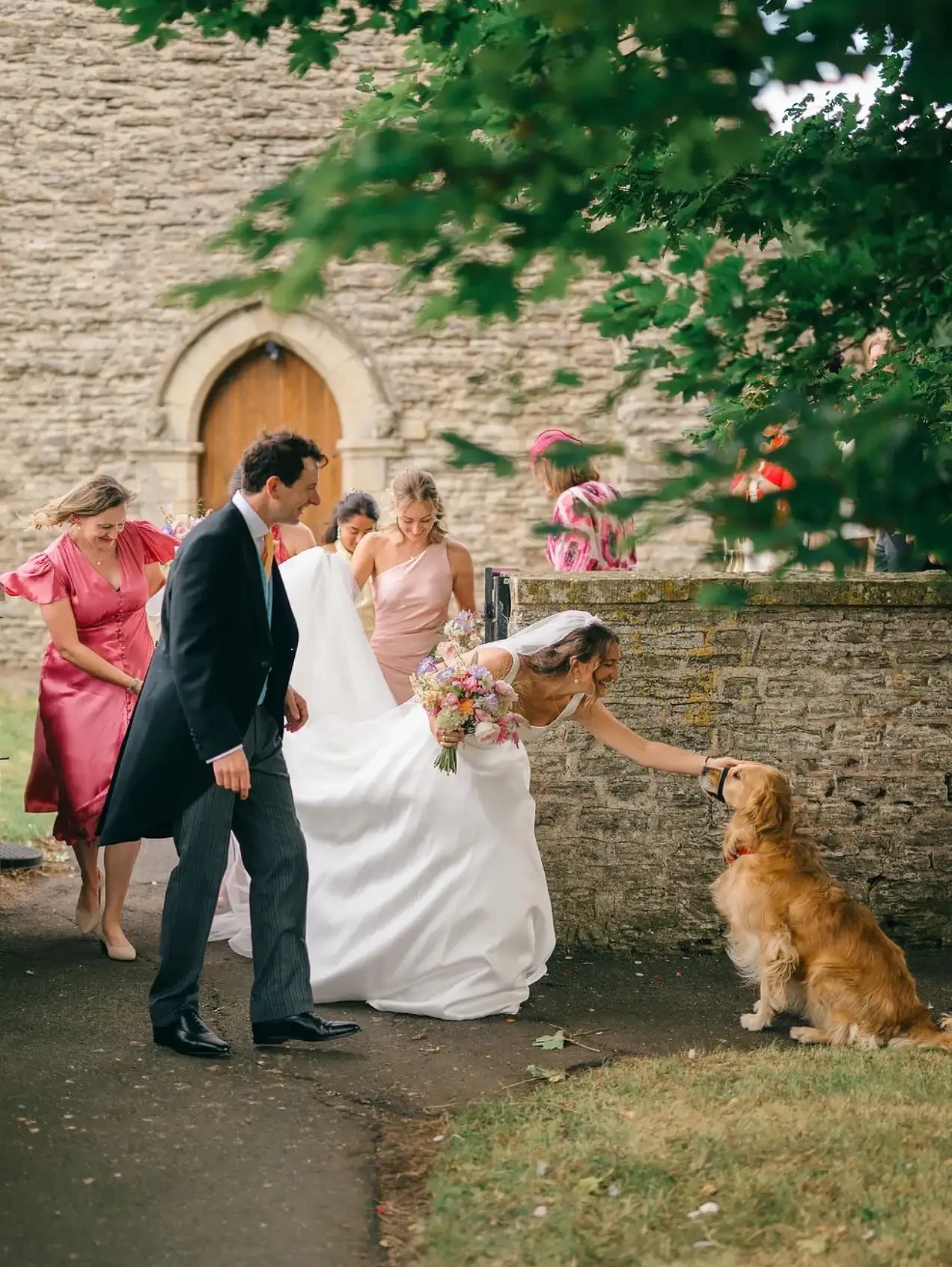
The single biggest mistake I see is treating the dog photograph like a formal portrait: everyone lined up, everyone looking at the camera, the dog expected to sit still and stare down a stranger with a lens. That rarely produces the photograph anyone actually wants. Dogs photograph best doing something — walking, being greeted, leaning into a fuss, watching something happen just off to the side. Movement and interaction beat posing, every time.
Practically, here’s what tends to work:
I’d also gently push back on the idea that every photograph needs to be perfect. A dog mid-shake, a lead slightly visible, an ear at a funny angle — these are usually the photographs couples end up loving most, because they look like their actual dog rather than a stock image of one. I’d rather capture five real seconds than stage thirty fake ones.
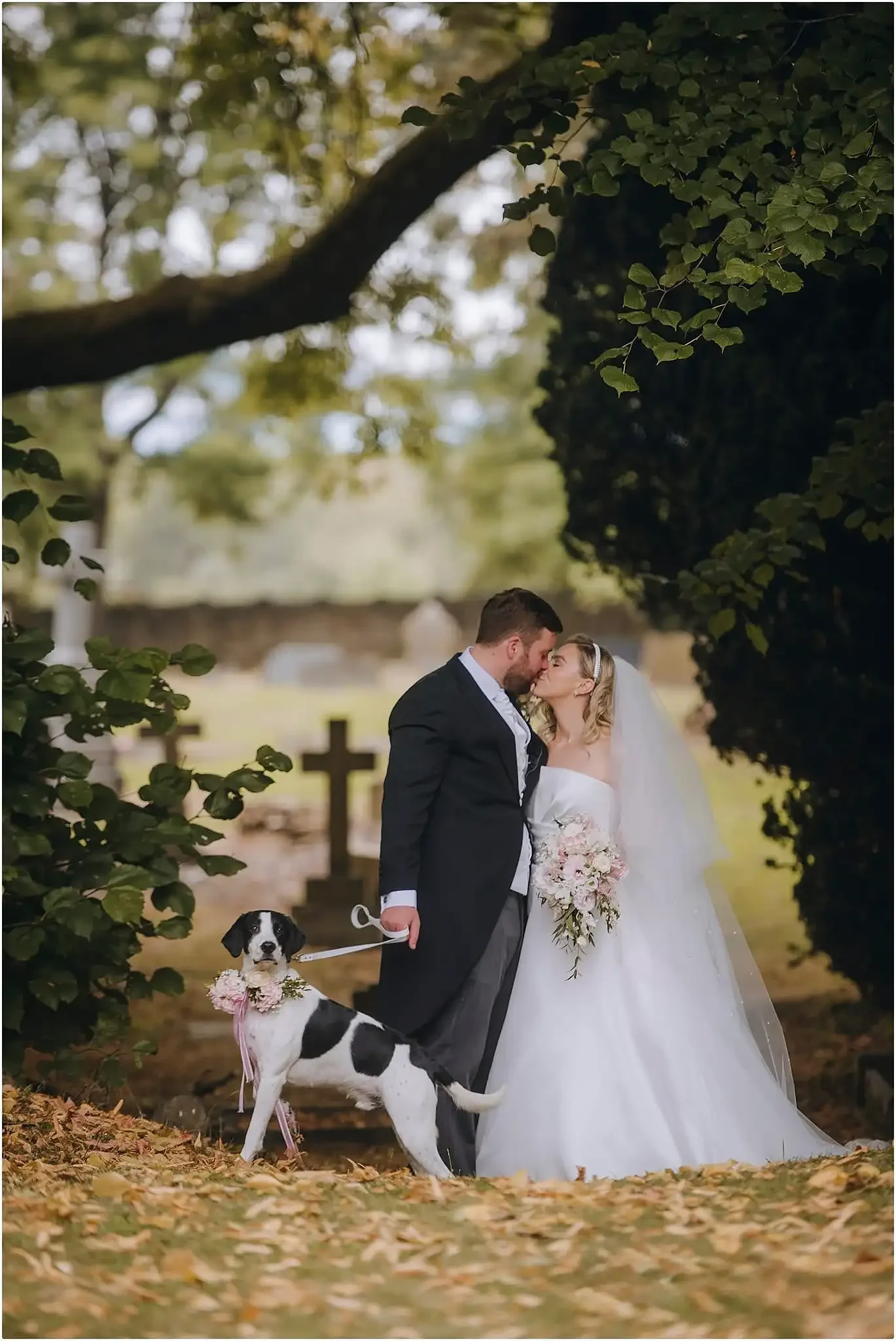
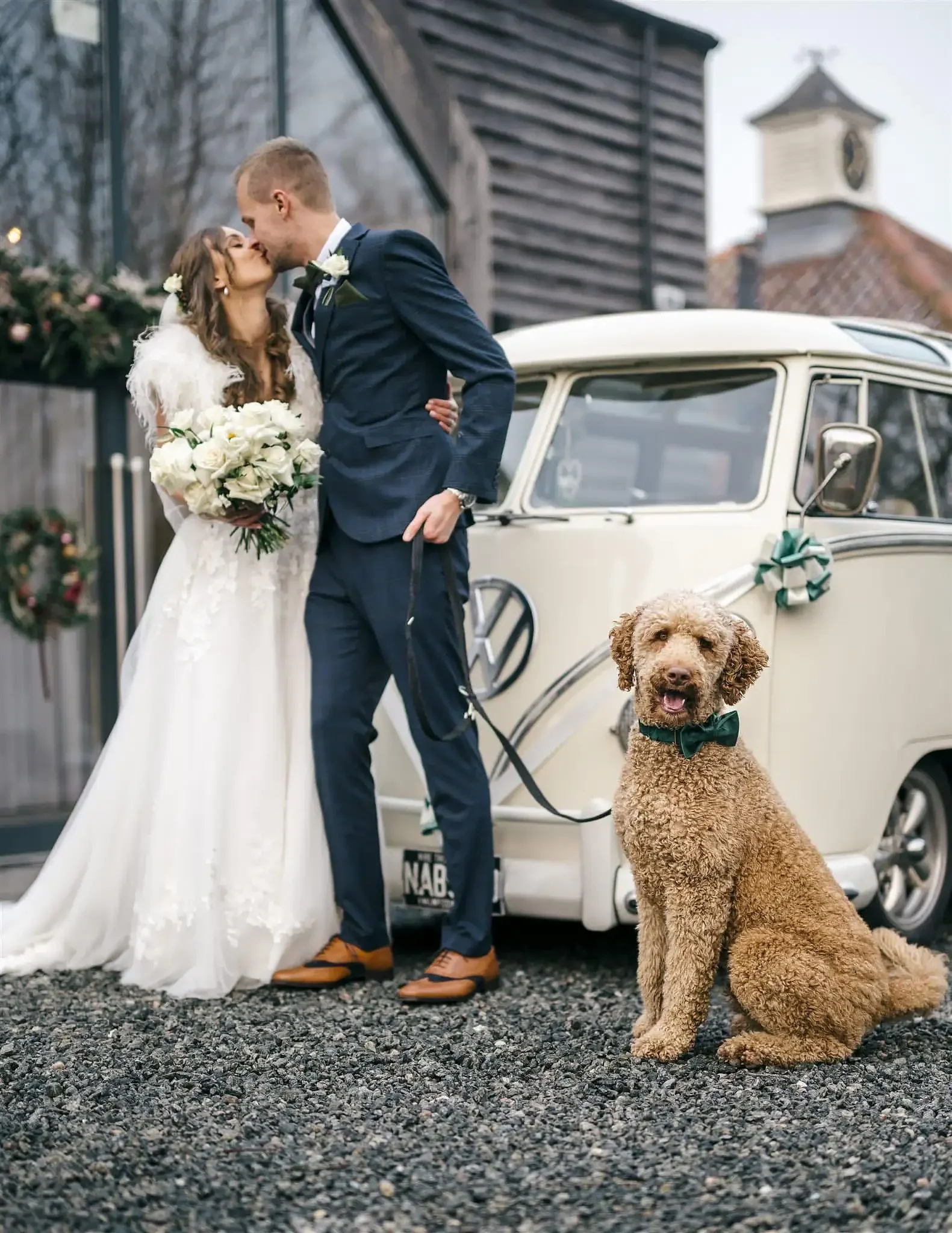
If you want ideas rather than rules, these are the shots that consistently work well:
Avoid anything that requires the dog to hold a pose for more than a few seconds, or that relies on props the dog hasn’t worn before. The gimmick shots — dog wearing sunglasses, dog “reading” the order of service — rarely age as well as a genuine moment does.
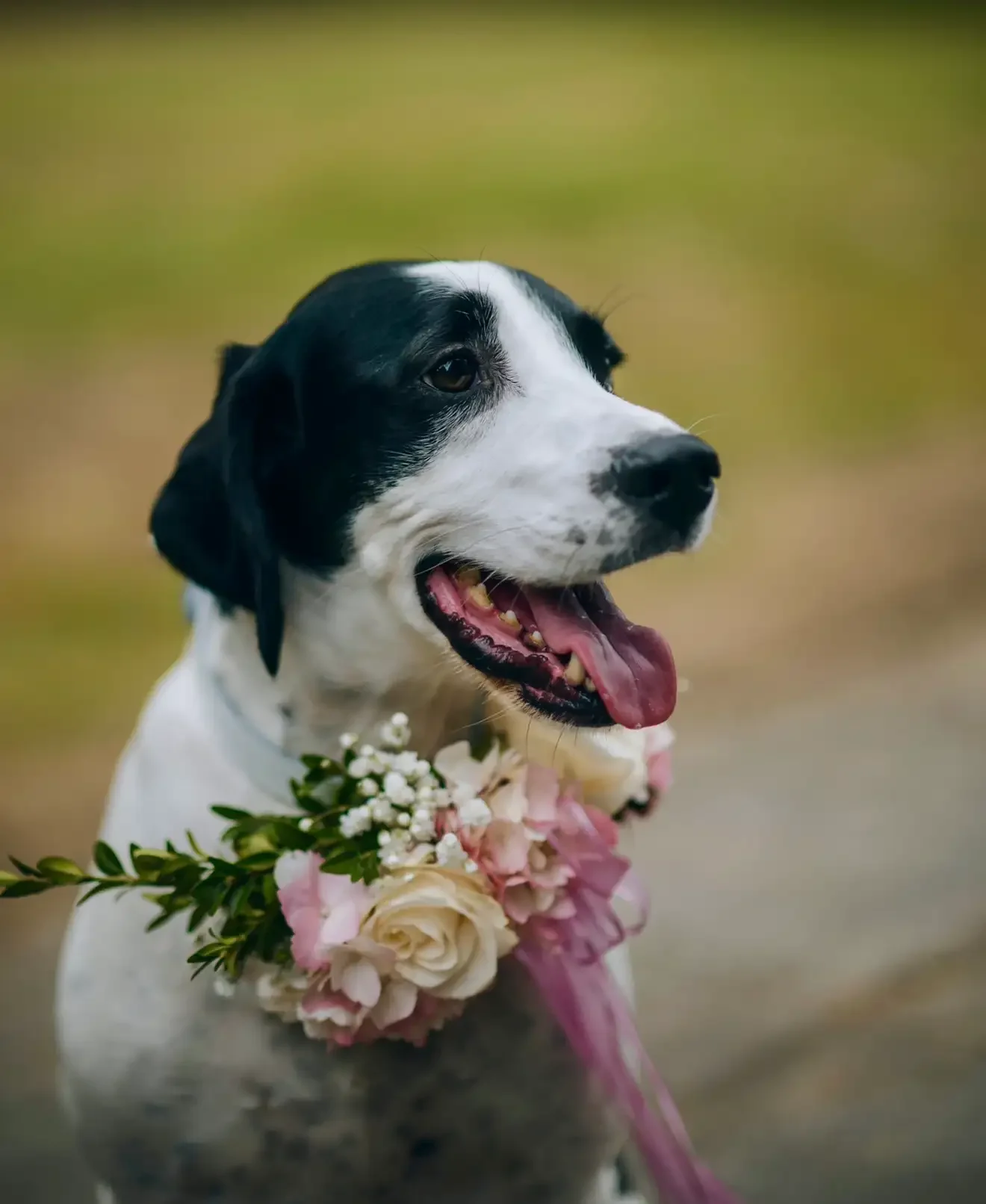
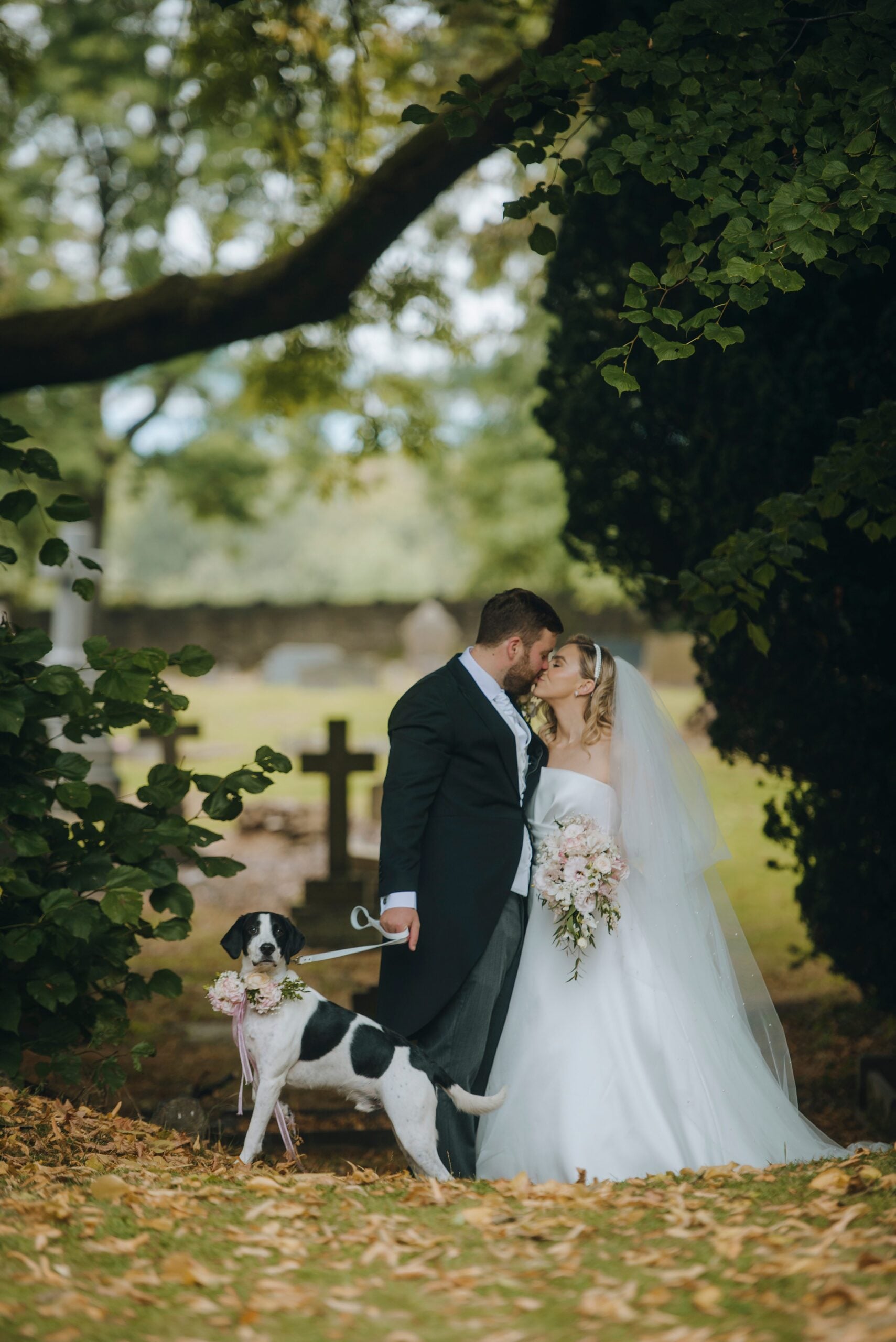
Keep it simple. A well-fitted collar, a bow tie, a bandana, or a floral collar all photograph beautifully without getting in the dog’s way. Harnesses are worth considering for better lead control, especially with a stronger dog.
Whatever you choose, test it beforehand. Not on the morning of the wedding — days or weeks before, so you know the dog will actually tolerate wearing it for a few hours. Watch out for:
In cold weather, a coat matters more for comfort than style. In hot weather, a lightweight cooling collar or vest is worth considering, particularly for flat-faced breeds. Comfort first, photographs second — a comfortable dog is a better-behaved dog, and a better-behaved dog makes a better photograph anyway.
Pack familiar food rather than relying on the venue or hoping someone remembers. A portable water bowl and regular access to water matters more than people expect, especially outdoors in summer. Bring a bed or blanket and a favourite toy so the dog has somewhere that feels like theirs amid an unfamiliar space.
Ask your handler to keep guests from feeding the dog wedding food, however tempting the canapés look from table height. Common wedding-table hazards for dogs include chocolate, grapes and raisins, alcohol, onions, rich or fatty food, cooked bones, and artificial sweeteners found in some desserts. A quiet word to close family and the wedding party ahead of time heads off most of this.
For anything beyond general common sense — medication, existing health conditions, specific dietary needs — speak to your vet rather than relying on a blog post, including this one.
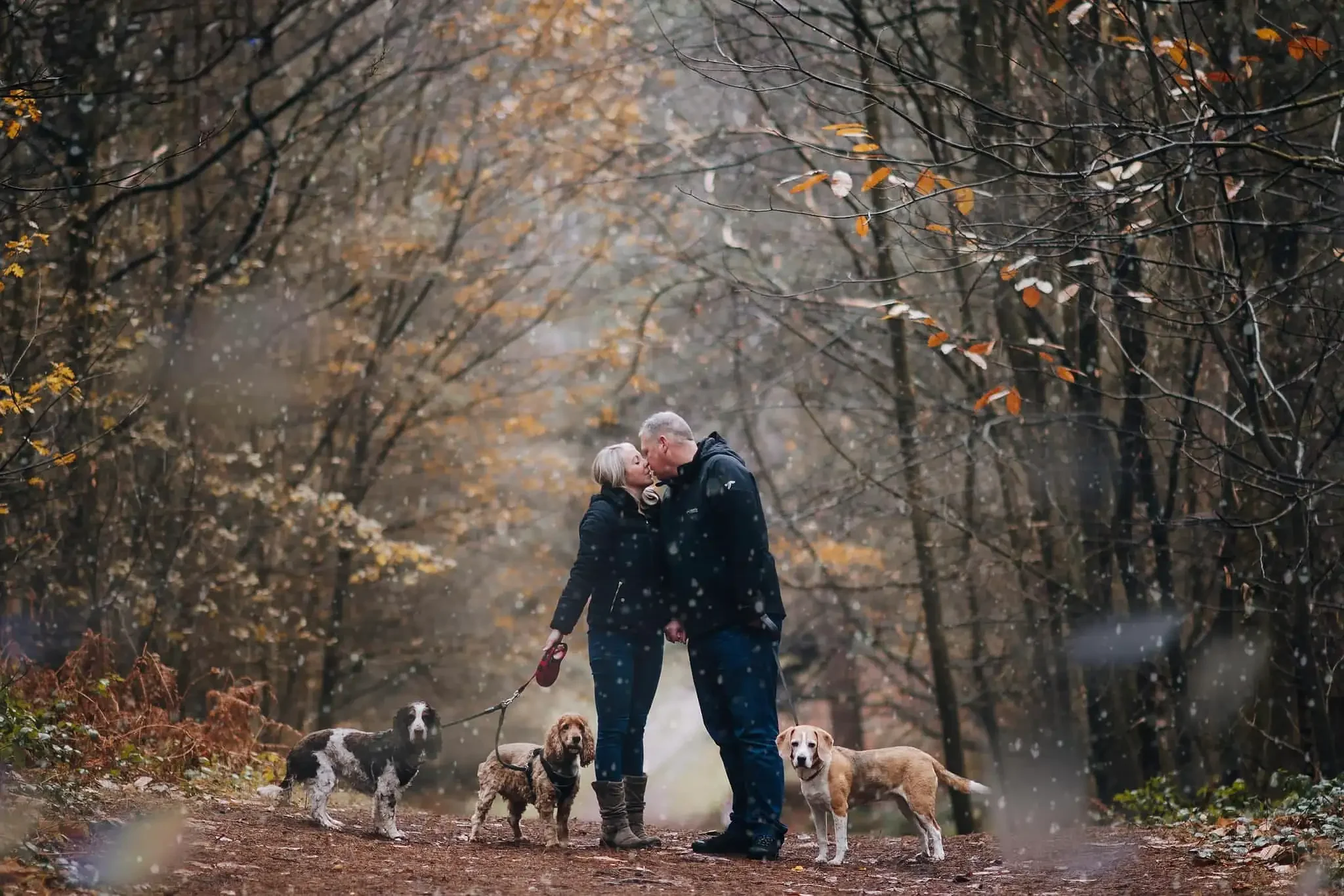
British weather doesn’t care about your timeline, dog included. Pack towels for muddy paws before anyone goes near your wedding dress or a good suit, and agree an indoor back-up spot for photographs with your dog if the forecast looks unreliable.
In summer, watch for hot pavements, direct sun with no shade, and never leave a dog in a car even briefly. Consider shortening the dog’s attendance during extreme heat rather than pushing through it. In winter, a coat and a warm, sheltered spot to rest between appearances make a real difference, especially for older dogs or short-haired breeds.
Rain itself doesn’t ruin dog photographs — some of my favourite wedding images have happened in a downpour, dog included. It just means building in a few extra minutes for towelling off and a realistic back-up plan rather than hoping for the best.
Transport the dog securely — a crash-tested harness, crate or carrier rather than loose on the back seat, particularly for a longer journey. Build in breaks if you’re travelling any real distance, and bring familiar bedding so the car and any overnight stay feel less alien.
If your dog is staying overnight, confirm the accommodation genuinely accepts dogs (not every “pet-friendly” listing means unattended dogs are fine), check in with feeding and walking schedules in mind, and know the nearest emergency vet before you need one. If your dog is prone to separation distress, it’s worth arranging for someone to stay with them rather than leaving them alone in an unfamiliar room.
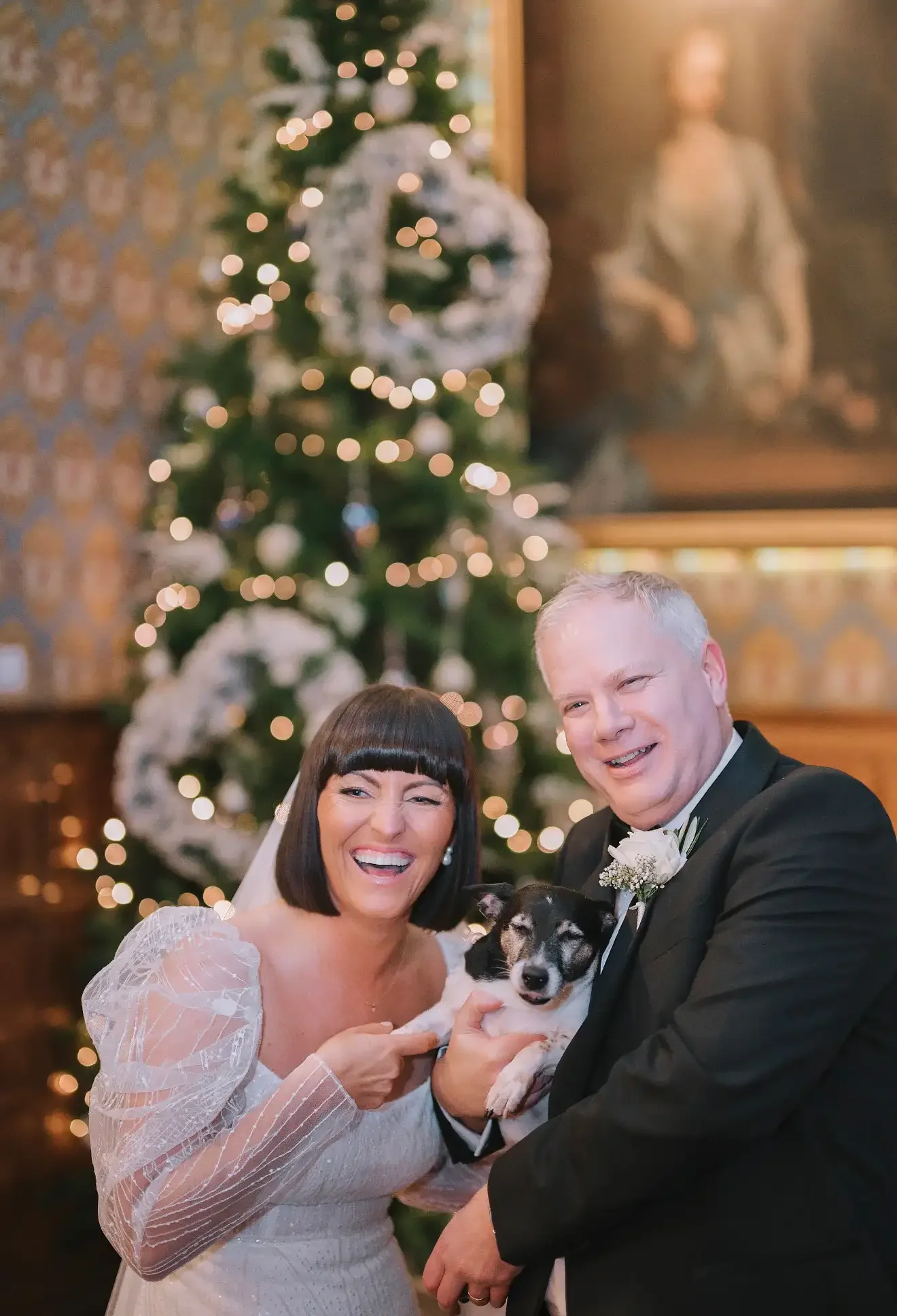
It’s tempting to make assumptions by breed — “spaniels are always chilled,” “collies always struggle with crowds” — but I’ve photographed enough weddings to know individual temperament matters far more than breed stereotype. Judge the dog in front of you, not the breed on paper.
That said, a few practical things are worth factoring in: energy levels and prey drive if there’s livestock or wildlife nearby, noise sensitivity around a loud reception, heat tolerance for flat-faced breeds in warm weather, joint comfort for older dogs on a long day, and confidence levels for puppies who haven’t yet built up experience with crowds. Large dogs in a tightly packed indoor venue need more space consideration than a smaller dog would. None of this rules a dog out — it just shapes how long they stay and what role suits them.
Excited children and an excited dog are a combination that needs a watchful adult nearby, not left to sort itself out. Brief young guests (and their parents) on approaching calmly rather than running at the dog, and give the handler licence to say no to a fuss if the dog needs a break.
If there’s more than one dog at the wedding, or a resident venue dog, introduce them somewhere neutral before the day if you can, and keep both on leads until you’re confident they get along. If the venue has horses or livestock on site, keep your dog on a lead and at a sensible distance at all times — this is also often a specific venue rule, not just good practice.
I’m not a lawyer or an insurer, and this isn’t legal advice — just a nudge to check the practical things before the day, rather than after something’s gone wrong.
Some venues ask for proof of dog insurance, particularly public liability cover, before they’ll confirm a dog can attend. If you’re using a professional chaperone, ask whether they carry their own insurance for the work. Check your own pet insurance covers any damage or incidents away from home. Get any venue agreement about dogs in writing rather than relying on a verbal “yes, that’s fine” from a site visit months earlier — staff change, policies get updated, and written confirmation protects everyone.
If you’re in any doubt about your specific situation, the venue, your insurer, and your chaperone’s provider are the three people to ask directly.
This is the section couples least want to read, and the one I’d argue matters most.
Sometimes the kindest decision is leaving your dog at home, and it doesn’t mean they’re any less part of the family. Reasonable grounds to reconsider include severe anxiety around crowds or noise, any history of aggression or reactivity, poor health or advanced age that makes a long day genuinely difficult, extreme weather forecast for the day, a venue that simply won’t allow it, a long journey that would stress the dog more than it’s worth, or real risk around young children or livestock that can’t be safely managed.
None of that has to mean your dog is left out of the day entirely. Good alternatives I’ve seen work well:
If you’re set on photographs with your dog but the wedding day itself isn’t realistic for them, a relaxed dog portrait session beforehand, somewhere they already feel at home, is often the better photograph anyway.
What to pack
In the final week, run through this:
Can I take my dog to my wedding?
In most cases, yes, provided your venue allows it and your dog is comfortable in a busy, unfamiliar environment. Confirm the venue’s specific policy first.
How long should my dog stay at the wedding?
There’s no fixed rule, but three to four hours covering the key moments — ceremony, confetti, portraits, a bit of the drinks reception — tends to suit most dogs better than a full day.
Should my dog attend the ceremony?
Only if they’re genuinely comfortable with noise, crowds and sitting relatively still for a stretch of time. If in doubt, bring them in for confetti and portraits instead.
Who should look after my dog?
Someone who isn’t in the wedding party and isn’t needed elsewhere — a trusted friend, family member, or professional dog wedding chaperone.
What is a dog wedding chaperone?
A person, sometimes a paid professional, whose sole job on the day is looking after your dog — feeding, walking, toilet breaks, and bringing them in for the moments you want them included.
Can my dog be a ring bearer?
Yes, though I’d recommend a symbolic ring attached securely rather than the real rings, unless you’re confident in the set-up.
What should my dog wear?
Something simple and already tested — a collar, bow tie, bandana or floral collar. Avoid anything new, restrictive, or with loose parts they could chew.
How do you photograph dogs at weddings?
By keeping it short, natural and treat-led rather than posed. Movement and genuine interaction photograph far better than a dog forced to sit and stare at a camera.
What happens if my dog barks during the ceremony?
It happens more often than you’d think, and it’s rarely the disaster it feels like at the time. A good handler will have them out of the room within moments if needed.
What happens if it rains?
Bring towels, agree an indoor back-up spot for photographs, and don’t worry too much — some of the best dog wedding photographs happen in the rain.
Are wedding venues usually dog-friendly?
Many are, but “dog-friendly” varies hugely between venues. Always confirm exactly what’s allowed rather than assuming.
Should an anxious dog attend a wedding?
Probably not, or only very briefly. A wedding is a lot of noise and unfamiliar people for a dog that finds that stressful. There are good alternative ways to include them — see the section above.
Can dogs attend wedding receptions?
Often, yes, for a limited window, provided the venue allows it and a handler is managing them throughout.
What should I pack?
See the full packing checklist above — lead, water, familiar food, waste bags, towels, bedding, and the handler’s instructions and vet details.
Does my dog need insurance to attend a wedding?
Some venues ask for it, particularly public liability cover. Check with your venue directly, and check your own pet insurance covers you away from home.
Including your dog doesn’t need to turn the wedding into a photoshoot. With sensible planning, enough time, and someone responsible for their care, they can be part of the day naturally — not stage-managed, just there, doing what dogs do best.
If you’re looking for relaxed, documentary wedding photography across Yorkshire, Nottinghamshire or further afield — dog included — I’d love to hear your plans. Whether you’re weighing up a Rossington Hall wedding, a Norwood Park wedding, or somewhere closer to home in Nottinghamshire, I know the quiet corners at most of these venues where you and your dog can grab five minutes away from the crowd.
The short version
Have a look at the full wedding photography prices and packages, or tell me about your dog and your plans below.
Tell me about your dog & your wedding plansFor more practical help with the details, I’ve also written about wedding planning guide.
You can find more relevant examples and planning information in my dog and family portrait photography guide.